Clay to Vase
Mason O'Donnell
| 10-04-2026
 · Lifestyle Team
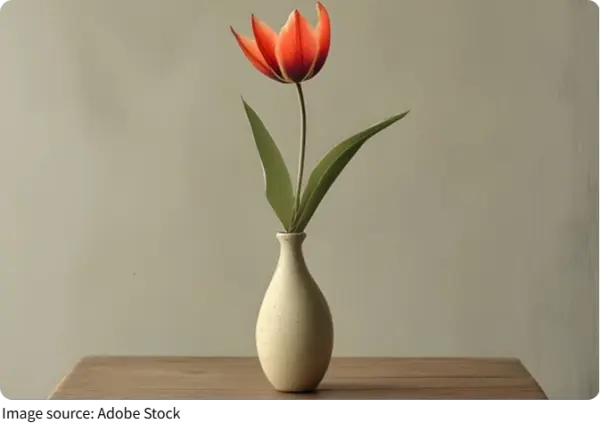
A small ceramic vase sits on a wooden table near a window, catching soft daylight. At first glance, it appears simple—smooth surface, gentle curves, quiet presence.
Yet behind that stillness is a process that begins not with beauty, but with raw material pulled from the ground.
The transformation from soft earth to finished object is not instantaneous; it is a sequence of physical actions, each leaving subtle traces that remain even after the final firing.
Clay preparation and the foundation of form
Every ceramic vase begins with clay that must be prepared before shaping can even start. This stage is less visible but determines the stability of everything that follows.
Key steps include:
1. Removing air pockets through repeated kneading to prevent cracks during firing.
2. Adjusting moisture levels so the clay reaches a balanced, workable consistency.
3. Filtering out small impurities that may affect surface smoothness later.
A potter working in a small workshop near a quiet riverside studio in Vermont once described this stage as “preparing silence into something workable.” The clay is still unformed, but its potential is already being structured through touch and repetition.
Wheel throwing and the emergence of shape
Once the clay is ready, it is placed on a rotating wheel where form begins to appear. This is the stage most people associate with ceramic making, yet it is also the most sensitive to movement and pressure.
During wheel throwing, several key dynamics come into play:
1. Hand pressure determines wall thickness and overall symmetry.
2. Wheel speed influences how quickly the form rises or collapses.
3. Moisture balance controls whether the clay responds smoothly or resists shaping.
Even small variations in hand movement can result in noticeable differences in final form. Two vases created from the same amount of clay can look entirely different because of slight timing shifts or pressure adjustments during rotation.
Hand shaping and controlled imperfection
Not all ceramic pieces are fully symmetrical. Many are intentionally shaped by hand after or during wheel work to introduce subtle variation. This stage allows the object to move away from mechanical uniformity.
Common shaping approaches include:
1. Pinching edges to create softer, irregular contours.
2. Adjusting the neck or opening to influence how it holds flowers or light.
3. Adding surface texture that will later interact with glaze.
A ceramic studio in Kyoto, Japan, known for small-batch handmade vessels, often emphasizes that “small asymmetry carries memory of the maker's hand.” These variations are not errors; they are records of human contact embedded in material form.
Drying and structural transition
After shaping, the vase enters a drying phase where water slowly evaporates. This is a critical period because the object is still fragile but gradually gaining structural integrity.
During this stage:
1. Rapid drying can cause surface cracks or warping.
2. Uneven airflow may distort shape consistency.
3. Controlled environments allow more predictable hardening.
The vase is no longer soft enough to reshape, yet not strong enough to withstand pressure. It exists in a transitional state where structure is forming without final strength.
Firing and material transformation
Firing is the stage where clay becomes ceramic. In a kiln, high temperatures permanently alter the material's internal structure, making it hard, durable, and stable.
Key transformations include:
1. Chemical changes that remove remaining water molecules from the clay.
2. Hardening of particles into a unified ceramic body.
3. Fusion of glaze layers that create surface depth and color variation.
A studio in Portland, Oregon, known for wood-fired ceramics, often leaves slight variations in surface tone caused by flame movement inside the kiln. These variations cannot be fully controlled, which means each piece emerges with unique surface patterns influenced by heat direction and placement.
Surface, glaze, and final identity
After firing, the vase gains its final visual identity through glaze and surface finish. This is where functional object becomes expressive form.
Considerations include:
1. Gloss levels that influence how light interacts with the surface.
2. Color depth shaped by mineral composition in the glaze.
3. Texture differences that affect both appearance and touch.
Even identical glaze recipes can produce different outcomes depending on kiln position and temperature variation. This unpredictability ensures that no two vases are exactly alike, even when produced in the same batch.
Handmade presence in everyday space
A finished ceramic vase carries more than function. It carries traces of pressure, heat, timing, and material behavior. When placed in a room, it does not simply hold flowers; it holds evidence of its own formation process.
There is something quietly steady about this kind of object. It does not demand attention, yet it changes how surrounding space is perceived—light appears softer against its surface, and empty space feels more intentional.
The journey from clay to ceramic is not only technical but also cumulative. Each stage leaves behind a layer of invisible decision-making that becomes part of the final object. And in that sense, every vase is less a finished product and more a record of transformation still visible in stillness.